
Peptides have become one of the most discussed topics in biotechnology, medical research, sports science, and skincare. As scientists continue discovering new applications, understanding the different types of peptides is essential for anyone interested in peptide science.
If you’re new to this topic, we recommend reading our What Are Peptides? A Complete Beginner’s Guide first. That article explains what peptides are, how they work, and why they’re important before diving into the different categories discussed below.
In this guide, we’ll explore the major types of peptides, their functions, and where they are commonly studied.
Peptides are short chains of amino acids linked together by peptide bonds. They are smaller than proteins and act as signaling molecules throughout the body. Different peptides perform different biological functions, making them valuable tools in scientific research.
Each peptide has a unique amino acid sequence, determining its specific biological activity.
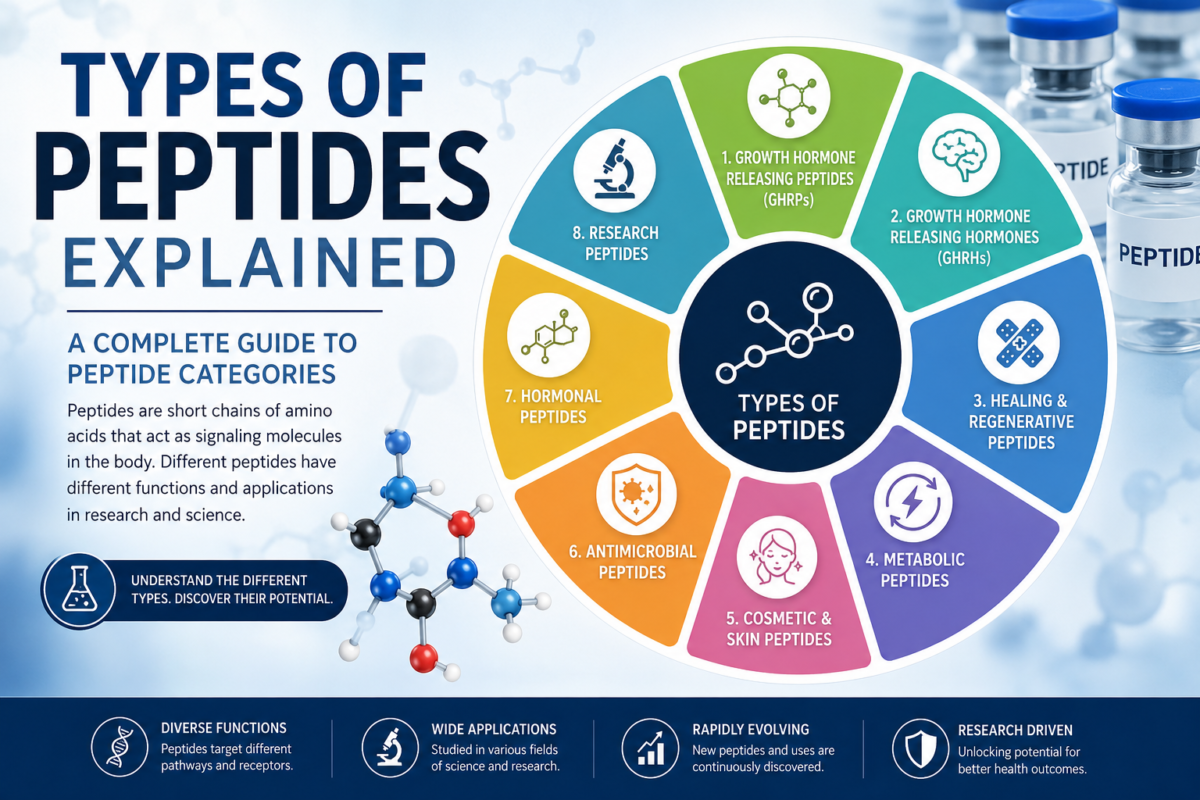
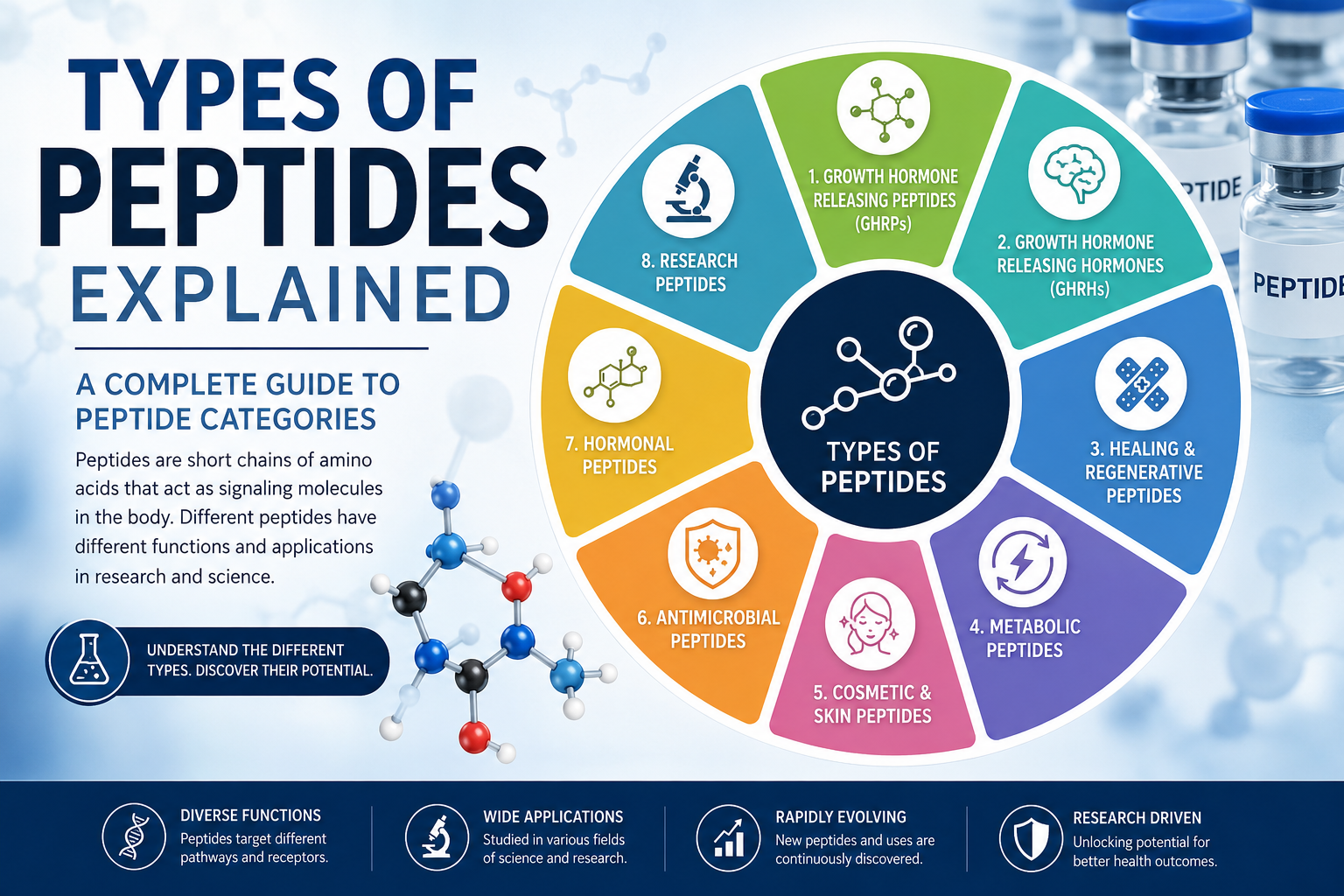
Not all peptides serve the same purpose. Some regulate hormones, others support tissue repair, while some influence metabolism, immune responses, or skin health.
Scientists generally classify peptides based on their biological function or research application.
Growth Hormone Releasing Peptides stimulate the body’s natural release of growth hormone by acting on specific receptors.
Common examples include:
Researchers study these peptides for their potential roles in:
Unlike GHRPs, Growth Hormone Releasing Hormones work by stimulating the pituitary gland through a different biological pathway.
Examples include:
These peptides are commonly investigated in endocrine and metabolic research.
One of the fastest-growing areas of peptide research focuses on tissue repair and regeneration.
Popular research peptides include:
Researchers investigate these compounds for their potential involvement in:
Metabolic peptides are being widely studied for their influence on appetite, glucose regulation, and energy metabolism.
Examples include:
These peptides are currently among the most active areas of pharmaceutical research.
The skincare industry has embraced peptides because of their ability to communicate with skin cells.
Common cosmetic peptides include:
These ingredients are frequently found in products designed to improve:
Antimicrobial peptides are naturally produced by many organisms as part of their immune defense.
Researchers study them because they may:
They represent an exciting field in infectious disease research.
Certain naturally occurring hormones are themselves peptides.
Examples include:
These molecules regulate numerous physiological processes including blood sugar, reproduction, hydration, and metabolism.
Many peptides are produced specifically for laboratory and scientific research.
Examples include:
These compounds are commonly used to investigate biological pathways, cellular responses, and therapeutic potential in preclinical and clinical research settings.
Scientists may classify peptides based on:
Because one peptide can influence multiple biological systems, some compounds fit into more than one category.
The answer depends entirely on the intended research objective.
For example:
Each peptide has unique properties that make it suitable for different scientific investigations.
Peptide science continues to evolve rapidly. Advances in biotechnology are enabling researchers to develop more stable, targeted, and effective peptide compounds for a wide range of applications.
As research expands, peptides are expected to play an increasingly important role in medicine, regenerative science, dermatology, metabolic research, and drug development.
Peptides are far more diverse than many people realize. From growth hormone peptides and regenerative compounds to metabolic, cosmetic, and antimicrobial peptides, each category serves a unique purpose in scientific research.
Understanding these different types provides a stronger foundation for exploring the growing world of peptide science.
If you’re just beginning your journey into peptides, don’t miss our What Are Peptides? A Complete Beginner’s Guide, where you’ll learn the fundamentals before exploring the specialized peptide categories discussed in this article.
The primary categories include growth hormone peptides, regenerative peptides, metabolic peptides, cosmetic peptides, antimicrobial peptides, hormonal peptides, and research peptides.
No. Each peptide has a unique amino acid sequence and biological function, making different peptides suitable for different areas of research.
Regenerative peptides are compounds being studied for their potential roles in tissue repair, wound healing, collagen production, and cellular recovery.
Peptides act as biological messengers that regulate many essential functions in living organisms, making them valuable subjects of scientific and medical research.
Start with our What Are Peptides? A Complete Beginner’s Guide, then explore individual peptide categories and specific compounds to deepen your understanding.