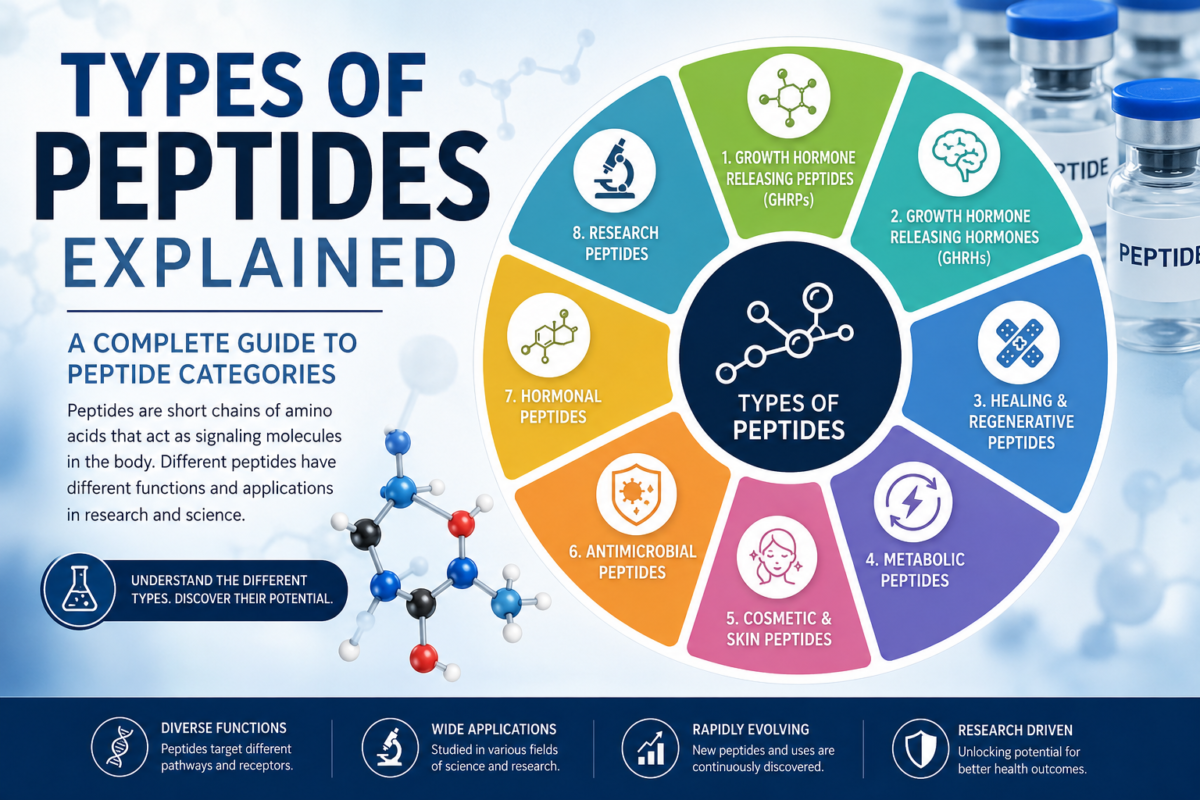
Peptides have become a central topic in sports science, endocrinology, and fitness. Operating as biological signaling molecules, peptides act as cellular messengers—instructing your body to increase growth hormone (GH) release, accelerate tissue repair, or burn stored adipose tissue.
Unlike traditional anabolic agents, peptides do not directly replace natural hormone levels; instead, they signal the body to optimize its own production.
1. What Are Peptides and How Do They Work?
Peptides are short chains of amino acids (typically between 2 and 50) linked by peptide bonds. While proteins are complex, long-chain amino acid structures, peptides are smaller, making them easily recognized by specific cellular receptors.[ Amino Acids ] ──> [ Peptides (2-50 chains) ] ──> [ Proteins (50+ chains) ] │ ▼ (Binds to Cell Receptors) │ ▼ [ Triggers Specific Biological Actions ]
In muscle growth and fat loss (body recomposition), peptides primarily operate through three pathways:
Growth Hormone Secretagogues (GHS): Receptors in the pituitary gland are stimulated to pulse natural Human Growth Hormone (HGH).
Lipolysis Activation: Signals tell fat cells (adipocytes) to break down stored triglycerides into usable energy.
Connective Tissue & Angiogenesis Repair: Blood flow and collagen synthesis are enhanced in tendons, ligaments, and muscle fibers.
2. Do Peptides Make You Lose Weight and Gain Muscle Simultaneously?
Yes, specific peptides facilitate simultaneous fat loss and muscle gain—a process known as body recomposition.┌──> Stimulates Lipolysis ────────> Fat Loss [ Growth Hormone Pulse ] ──┤ └──> Increases IGF-1 Synthesis ───> Muscle Hypertrophy & Repair
When growth hormone secretagogues induce a secretagogue pulse:
Fat Loss: Growth hormone activates hormone-sensitive lipase (HSL), mobilizing stored fat for fuel during energy deficits.
Muscle Growth: Increased GH levels trigger the liver to produce Insulin-like Growth Factor 1 (IGF-1). IGF-1 accelerates amino acid uptake, enhances protein synthesis, and aids satellite cell activation for muscle cell repair.
3. Which Peptides Are Best for Fat Loss and Muscle Growth?
The most effective peptides are categorized based on their primary physiological function:
Peptide Category
Prominent Examples
Primary Action & Benefit
Target Outcome
GHRH Analogues
CJC-1295 (DAC / No DAC), Sermorelin
Amplifies natural growth hormone pulses
Muscle preservation, recovery, steady fat loss
Ghrelin Mimetics (GHS)
Ipamorelin, GHRP-2, GHRP-6
Triggers targeted pituitary release without spiking cortisol
Lean muscle hypertrophy, improved sleep quality
Targeted Lipolytics
Tesamorelin, AOD9604
Direct activation of lipolysis in visceral and subcutaneous fat
Targeted fat oxidation without affecting blood glucose
Tissue Repair & Recovery
BPC-157, TB-500 (Thymosin Beta-4)
Angiogenesis, collagen synthesis, tendon/ligament repair
Faster workout recovery, joint & gut lining healing
GLP-1 / GIP Agonists
Semaglutide, Tirzepatide
Gastric emptying delay, appetite suppression, insulin sensitivity
Significant overall weight loss & metabolic reset
Strongest Peptide Combination for Muscle Hypertrophy
The synergistic stack of CJC-1295 (No DAC) + Ipamorelin is widely considered the gold standard for muscle growth. CJC-1295 extends the signal to release GH, while Ipamorelin triggers the pulse. Together, they produce a clean, physiological wave of GH and IGF-1 elevation without severe side effects.
4. Are Peptides Safer Than Steroids?
Comparing peptides to anabolic-androgenic steroids (AAS) highlights fundamental biochemical differences in mechanism, side-effect profiles, and endocrine recovery.┌─────────────────────────────────────────────────────────────────────────┐ │ MECHANISM COMPARISON │ ├─────────────────────────────────────────────────────────────────────────┤ │ Anabolic Steroids : Exogenous Synthetic Hormones ──> Suppresses HPTA Axis│ │ Peptides : Natural Secretagogue Signals ──> Preserves Feedback │ └─────────────────────────────────────────────────────────────────────────┘
Key Differences: Peptides vs. Anabolic Steroids
Endocrine Suppression: Steroids introduce exogenous testosterone derivatives, causing the body to shut down natural hormone production (HPTA axis shutdown). Peptides act as signaling agents, encouraging the pituitary gland to release native hormones within physiological parameters.
Androgenic Side Effects: Steroids cause masculinizing/androgenic effects (hair loss, prostate enlargement, severe acne, voice deepening). Peptides do not bind to androgen receptors, avoiding these androgenic side effects.
Cardiovascular & Organ Strain: Steroids often alter lipid profiles (crushing HDL, raising LDL), strain the liver, and cause left ventricular hypertrophy. Peptides present a lower organ toxicity profile, though long-term research is ongoing.
Verdict: While peptides carry a generally lower risk profile than anabolic steroids regarding endocrine shutdown and organ strain, they are not completely risk-free and still require medical supervision.
5. Injections vs. Oral Peptides: What Works Best?
Understanding administration routes is critical for evaluating bioavailability and therapeutic efficacy:┌──> Oral / Sublingual ──> Degraded by Stomach Acid / Enzymes (Low Bioavailability) Administration ───┤ └──> Subcutaneous Injection ──> Bypasses Digestion (High Systemic Bioavailability)
1. Peptide Injections (Subcutaneous)
Efficacy: High. Injecting into subcutaneous fat bypasses digestive breakdown, allowing delicate amino acid chains to enter the bloodstream intact.
Best For: Growth hormone secretagogues (CJC-1295, Ipamorelin), Tesamorelin, and tissue-repair peptides (TB-500).
2. Oral Peptides & Supplements
Efficacy: Variable to Low. Most raw peptides are rapidly degraded by gastric acid and proteolytic enzymes in the stomach, rendering them ineffective.
Exceptions: Formulations using specialized liposomal delivery or enteric coatings—as well as specialized oral compounds like stable BPC-157 designed for localized gastrointestinal tract repair—show higher stability. However, for systemic muscle growth, injectable forms remain the primary clinical approach.
6. Best Peptides for Female Muscle Growth
Female athletes and bodybuilders often avoid anabolic steroids due to virilization risks (developing male secondary sex characteristics). Peptides offer an alternative pathway for body composition without androgenic activity.
Ipamorelin & Sermorelin: Preferred for women because they do not elevate circulating androgen levels or severely disturb prolactin and cortisol levels.
Benefits for Females: Enhanced collagen synthesis (beneficial for skin, hair, and joint integrity), targeted fat loss, improved sleep efficiency, and maintenance of lean muscle tone.
7. Side Effects and Safety Profile in Bodybuilding
While peptides are generally better tolerated than synthetic hormones, side effects can occur—especially with unmonitored use or excessive dosages:
Common Side Effects
Water Retention & Numbness: Increased GH levels can cause temporary fluid retention and mild carpal tunnel-like tingling in hands and fingers.
Insulin Resistance: Prolonged, high-dose GH secretagogue use can decrease insulin sensitivity, elevating fasting blood glucose levels.
Increased Appetite: Specific peptides (e.g., GHRP-6) activate ghrelin receptors, inducing significant hunger cues.
Injection Site Reactions: Redness, localized itching, or mild bruising.
8. Realistic “Before & After” Expectations
It is essential to maintain realistic expectations when utilizing peptide protocols:[ Weeks 1 - 4 ] ──> Deep sleep quality improves, enhanced recovery between workouts. [ Weeks 5 - 8 ] ──> Visible increases in muscle fullness, subtle reductions in body fat. [ Weeks 9 - 12+ ] ──> Noticeable body recomposition, improved joint durability.
Peptides vs. Steroids Speed: Peptides produce gradual, sustainable physical improvements over several months rather than dramatic short-term weight spikes.
Training & Nutrition Dependency: Peptides act as biological amplifiers; without structured progressive overload training, adequate protein intake, and calorie control, peptides yield limited results.